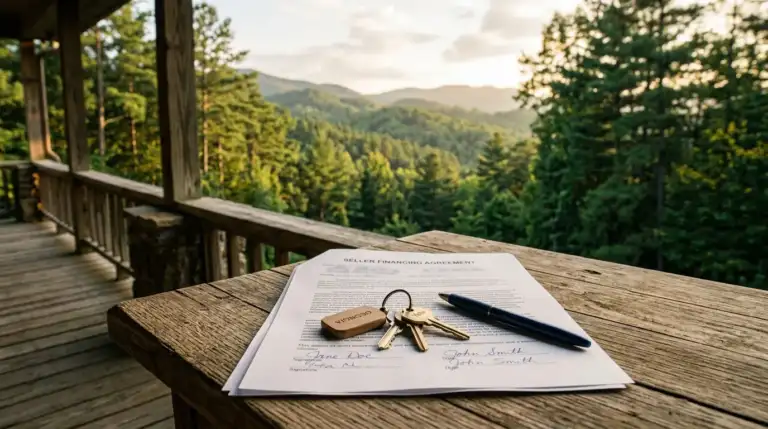
Owner-financed land in Georgia offers a path to purchase when conventional mortgage financing is unavailable or unsuitable for a specific parcel. However, buyers must conduct thorough land due diligence, verifying legal access, land surveys, soil suitability, and title history while having payment terms reviewed by qualified Georgia professionals before committing funds.
Owner financing can make a Georgia land purchase possible without a conventional mortgage, but it does not make the property easier to evaluate.

What Owner Financing Changes, and What It Does Not
With owner financing, the seller accepts payments over time instead of receiving the full price from a lender at closing. The agreement may use a promissory note, a security deed, a land contract, or another structure chosen by the parties and their advisors. Understanding how owner financing works in Georgia helps buyers navigate these options effectively.
The paperwork matters because it controls when title transfers, what happens after a late payment, and whether a balloon payment is due. For a deeper look at legal frameworks, review how to structure an owner-financed deal in Georgia to understand down payments, terms, and legality before signing.
An owner financing arrangement does not replace a title search, survey, inspection of access, or a practical plan for water, septic, and power. Buyers comparing options for owner-financed land in North Georgia should treat financing and land diligence as two separate jobs that meet at closing.
The arrangement also does not guarantee easier approval. Sellers may ask about income, down payment, references, or payment history. The right question is whether the total deal is workable for you, not whether the listing uses the words owner financing.
Start with the Land Before You Negotiate the Note
Land is less forgiving than a house when basic facts are missing. Ask where legal access begins and whether the road is public, private, or maintained by an association. Read the survey rather than relying on a pin dropped on a listing map. If the parcel depends on an easement, ask a Georgia real-estate attorney to explain the recorded rights and any practical limits.
In North Georgia, a beautiful view can sit behind a difficult road, a steep build site, or an unclear easement. Always confirm parcel suitability before negotiating financing terms.
Next, match the parcel to your plan. A buyer who wants a home site needs answers about topography, drainage, septic suitability, water, utilities, setbacks, and local rules. A recreational buyer still needs to understand access and boundaries. Exploring options for owner financed land in Georgia across mountains, farms, and rural properties highlights how drastically requirements shift by terrain and intended use.
The phrase “unrestricted” can be useful, but what unrestricted land with owner financing in Georgia means for a buyer depends on recorded restrictions, county rules, and the facts of that specific tract.
| Question | Why It Matters Before an Offer |
|---|---|
| Who maintains the access road? | Maintenance costs and seasonal access can affect daily use. |
| What supports a future septic system? | Soil and site conditions affect whether a home plan is practical. |
| Where are utilities available? | Extension work and service availability can change the real cost of the parcel. |
| What does the title search show? | Recorded liens, easements, and restrictions can shape ownership rights. |
Read the Payment Terms as a Full Package
Buyers often focus on the monthly payment first. That is understandable, but it can hide the most expensive part of the deal. Read the purchase price, down payment, interest rate, payment schedule, late-charge language, loan term, balloon date, prepayment rights, taxes, insurance requirements, and default provisions together.
If a term is unclear, pause before signing and get advice from a qualified Georgia attorney and lender or tax professional as appropriate. Reviewing detailed resources on owner financing in Georgia for buyers and sellers provides valuable clarity on standard contractual terms.
A lower monthly payment may be paired with a shorter payoff deadline via a balloon payment. Build a written plan for refinancing, selling, or paying the balance before that date. Do not assume a future lender will approve a refinance, especially if the land is raw, remote, or intended for a use that is hard to finance.
Use a Local Diligence Checklist for Mountain Acreage
North Georgia parcels can vary sharply within a short drive. Slopes, creek crossings, tree cover, and narrow roads can change what a parcel can support. Walk the land when possible, including the access route. Ask for documents instead of relying on verbal assurances.
A survey, recorded plat, septic or soil records, utility information, and title commitment each answer a different question. For a fuller list, review this owner-financed mountain land buying guide before you sign. The goal is not to make every deal complicated, but to surface questions while you still have time to negotiate, change course, or walk away.
Build a Safer Path from Offer to Closing
Put major contingencies and deadlines in writing. Use a title company or attorney who can explain the closing process and record the correct documents. Keep copies of the signed contract, note, payment schedule, and receipts. If the seller promises a repair, road work, survey, or utility step, make sure the agreement states who does it and when.
Keep purchase and financing documents together. Before closing, ask for a plain-language walk-through and verify that the legal description matches the parcel you inspected. Save payment records from the first installment onward to maintain a clean paper trail.
Leave room to say no. If the access, title, financing terms, or intended use remain unclear, use the due-diligence period to get answers. Do not let a promised payment amount rush a decision about land you have not fully understood.
Frequently Asked Questions
Can I buy land in Georgia with owner financing?
Yes, some sellers offer it. Availability and terms vary by seller and parcel, so confirm the written structure and complete normal title and land diligence.
Do I need a down payment for owner-financed land?
Many sellers request one, but there is no universal amount. Review the total payment obligation and avoid treating a low upfront payment as proof that the deal is affordable.
Does owner financing mean no credit check?
No. A seller may use any screening standard they choose. A claim of no credit check should not replace careful review of the contract and property.
Who keeps title during owner financing?
That depends on the written structure. Ask a qualified Georgia real-estate attorney to explain when title transfers and how the buyer’s interest is protected.
Can I build on owner-financed land right away?
Only after confirming access, zoning or county rules, setbacks, utilities, soil conditions, and the financing agreement’s requirements.
What should I check about a gravel road?
Confirm whether it is public or private, who maintains it, whether an easement is recorded, and whether it remains usable in wet weather.
Is unrestricted land always easy to use?
No. Recorded restrictions, county rules, access, terrain, and utilities can still limit your plans.
Should I get title insurance for owner-financed land?
Ask the closing attorney or title company what protection is available and appropriate for the deal. Do not skip a title search.
What is a balloon payment on land?
It is a remaining balance due on a stated date. Plan for it before signing rather than assuming a future refinance will be available.
Can a real-estate professional help me find land?
A local professional can help you search and understand the market, while attorneys, title professionals, and other qualified specialists address their own parts of the transaction.
Ready to Find Your North Georgia Land?
Explore available mountain acreage and rural properties with expert local support.
Search North Georgia homes with Gold Peach Realtyor call (770) 283-1223